

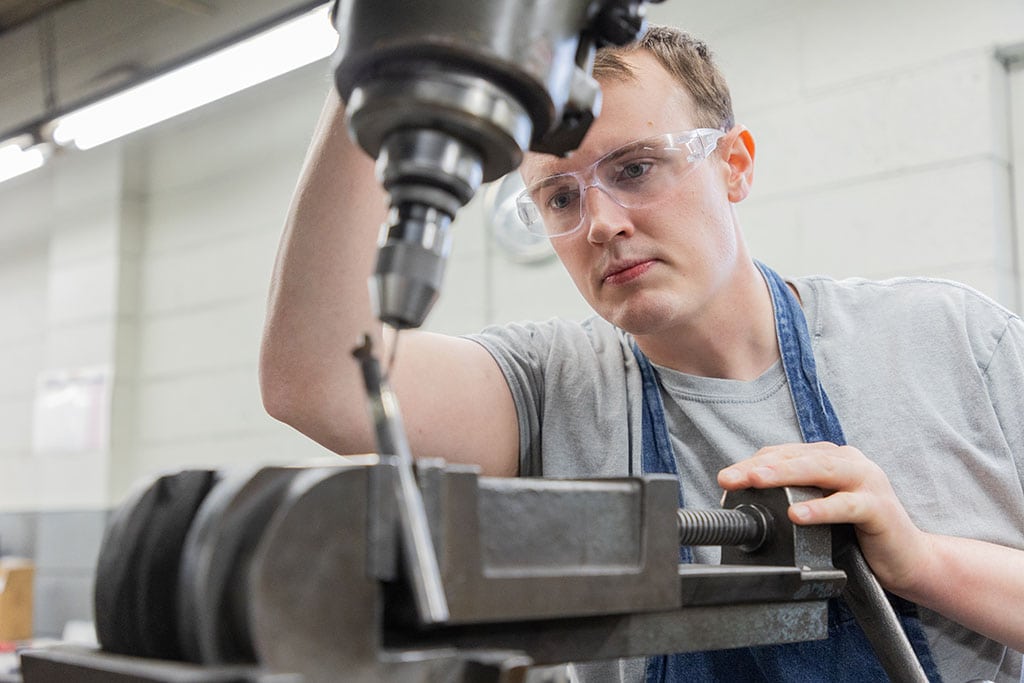
In a machine shop, safety isn’t an extra step. It’s how people, parts, and schedules stay predictable. Accidents usually come from surprises: a part that shifts, a tool that grabs, or a setup that wasn’t quite dialed. The fix is a culture of calm, repeatable steps. Keep the guidance simple, avoid promises you can’t verify, and focus on practices that reduce risk in any shop.
Start with the setup
Good housekeeping is the first guardrail. Clear floors and labeled storage limit snags before a spindle ever turns. Build a quick “before you cut” routine: verify guards are in place, check e-stops, confirm program and offsets, and recheck clamp locations. Treat each new job like a fresh risk review. Ask what might move, loosen, or heat up unexpectedly. Capture what works in a one-page setup sheet with photos so the next run starts safe by default.
Stable workholding reduces risk
Parts that shift create scrap, rework, and exposure. Aim for uniform, repeatable clamping that supports the print without distorting the part. Stable workholding is both a safety and quality win. It reduces fiddling, prevents surprises, and lowers the risk of injury or downtime.
Note: while tools like collets or custom fixtures provide the clamping force needed during machining, magnetic V blocks serve a different role. They’re inspection aids, used to hold round or irregular parts securely during measurement or dimensional verification, not during cutting.
Tool condition is a safety factor
Dull or chipped edges run hot, chatter, and pull, which tempts operators to nurse a cut. Make tool condition checks part of changeovers. Watch for finish haze, rising burrs, heat discoloration, or a creeping need for extra offsets. When the signs show, decide whether to regrind or replace.
Keep the stance simple: restore only when a tool can return to reliable performance. Otherwise, swap and move on. That mindset protects uptime and avoids pushing worn cutting tools past their safe, economical limit.
Communication beats heroics
Make it normal to pause when something sounds off, such as chatter, unusual vibration, or heat. Encourage operators to tag a suspect setup or tool and call for a second set of eyes.
Define the language you’ll use, such as what counts as chatter, what’s too hot, or who to call, so nobody hesitates. The faster a team can escalate and resolve, the fewer workarounds creep into the process. Calm, repeatable reactions prevent small issues from turning into injuries or missed deliveries.
Low-friction habits that add up
- Store for safety: Use dedicated bins for fixtures, parallels, and inspection tools like magnetic V blocks to avoid mix-ups and protect delicate surfaces from handling damage.
- Shorten overhang: A rigid setup is a safer setup. Reduce stick-out on bars and holders whenever possible.
- Coolant discipline: Confirm mix, flow, and aim during first-article checks to control heat and chip evacuation.
- Edge verification: After sharpening, verify edge quality and geometry, not just “looks sharp,” before returning cutting tools to production.
- Document once, reuse often: Save photos and parameters from calm-running jobs so new operators can replicate them.
Keep guidance general—and useful
Every shop has its own training, PPE, and lockout practices. Keep recommendations general, using phrases like “can help,” “consider,” or “check your procedure,” so they align with your internal rules. The common thread is predictability: stable workholding, healthy tools, and short routines that remove guesswork. That’s how you protect people and precision. It happens by design, not by chance.
Practical next step
If you’re tightening safety through better setups and tool condition, start by standardizing your inspection process with reliable magnetic V blocks. Partner with a sharpening service that returns cutting tools to spec, or tells you when it’s time to replace.
The goal isn’t slogans
It’s dependable, cutting-tool-driven machining that keeps people safe and parts in tolerance.
Related Posts
In production, tools rarely fail without warning. They whisper first: finish turns hazy, offsets creep, a cut starts to sing. Knowing which signals matter lets you pull a tool early...
Choosing a local machining partner is about more than mileage. Proximity turns complex work into a faster, clearer process: questions get answered in hours, not days; design changes can be...
How Often Do Tools Need to Be Sharpened? Short answer: it depends. Fixed calendars ignore what actually wears a tool—material, setup, feeds and speeds, coolant, and how rigid your workholding...